







Not all the renewable energy we need can be generated locally. This increases the need for solutions to transport hydrogen from areas with plenty of sun, wind and available space to industrial regions. Existing options each come with their own technical, energy-related, logistical and safety challenges.
A circular iron cycle
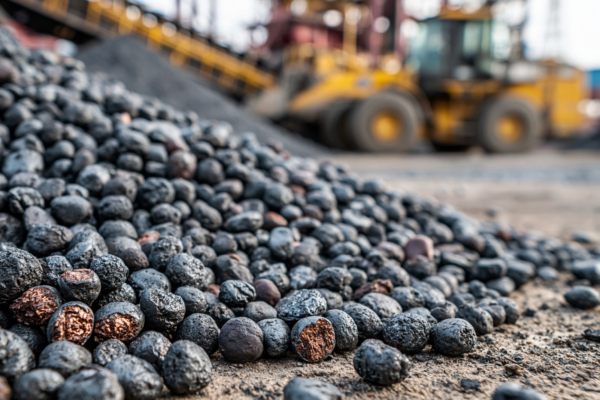
Iron could offer an alternative. By reacting iron oxide with green hydrogen, iron metal is produced. This iron can then be transported using existing bulk logistics. At its destination, the iron reacts with steam, producing hydrogen and iron oxide again. The iron can then be used again. This creates a circular iron cycle for storing and transporting hydrogen.
The water produced during the loading process can also be reused to produce hydrogen.
From the laboratory to real-world applications
IJzerkracht builds on a proof of principle developed by Team SOLID. The next step is the development of the Steam Iron Reactor 2 (SIR2): a pilot reactor that can both load iron with hydrogen and produce hydrogen from iron.
The reactor will have a capacity of 3 kg of hydrogen per hour (100 kW) and can store 75 kg of hydrogen (2.5 MWh) per cycle. It will be tested under realistic conditions in collaboration with hydrogen users. The project will assess the technology’s technical performance, efficiency, safety, material use, transport requirements, environmental impact and economic feasibility.
Towards a flexible energy system
The technology could open up new possibilities for storing and transporting hydrogen. For example, the reactor could supply hydrogen on demand to industrial companies with processes that are difficult to electrify. The iron cycle could also enable long-term energy storage. Surplus renewable electricity can be used to convert iron oxide into iron. When energy is needed later, hydrogen can be produced from the iron again.
The aim of IJzerkracht is to further scale up the technology and demonstrate it under realistic conditions – an important step towards practical application.
MNEXT’s contribution
Within IJzerkracht, MNEXT brings together applied research, education and practical application. Researchers, lecturer-researchers and students contribute to collecting, analysing and interpreting technical and environmental data. The project connects closely with several MNEXT research themes:
- Renewable energy carriers – investigating how iron compares with other energy carriers for storing and transporting renewable energy.
- Life cycle assessment – assessing the environmental impact, carbon footprint and energy efficiency of the iron cycle.
- System integration – exploring how the technology can be integrated into operational processes and the logistics chain, including aspects such as safety, inspection and permitting.
- Data acquisition & analysis – collecting and analysing data to assess the technology’s performance, risks and potential applications.
In this way, MNEXT contributes knowledge that not only supports the technical development of the technology, but also helps determine under which conditions it can be applied in practice in a sustainable way.
Want to know more?
Are you interested in the potential of using iron to store and transport hydrogen? Get in touch with MNEXT to explore what the insights from IJzerkracht could mean for your organisation or application.
IJzerkracht is made possible in part by OPZuid and co-financed by the European Union through the European Regional Development Fund (ERDF).
September 2026 until December 2028
Jesse Hameete
Onderzoeker Renewable Energy Carriers T: +31885259142 E: j.hameete1@avans.nlPartners involved