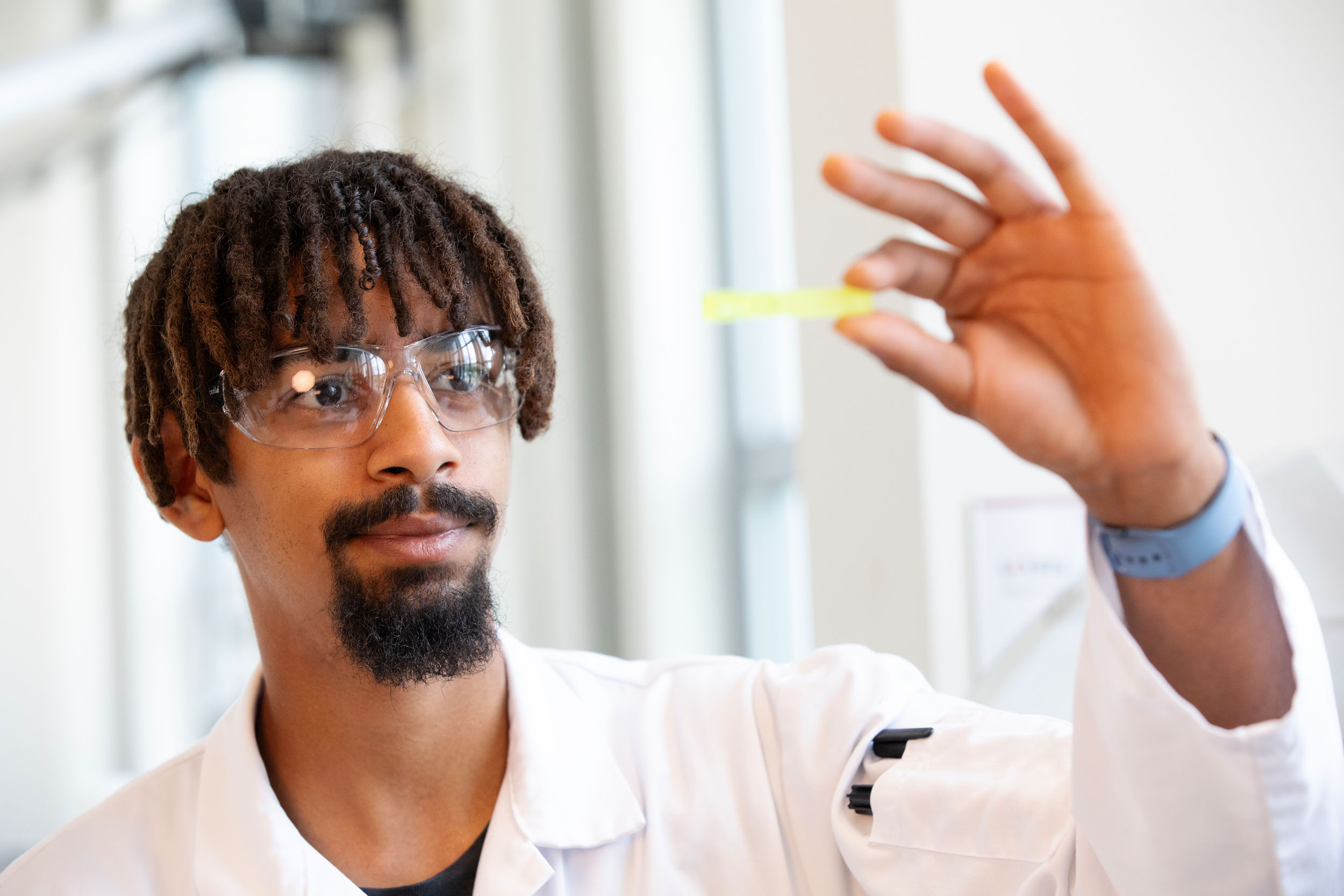



The JRCB is more than a facility; it is an important catalyst in the biobased transition North Brabant aims for. “Setting up the lab is a major step we were able to take thanks to FermiChem,” says Jasper Meijer, researcher Biobased Building Blocks & Products at MNEXT. “It aligns with the region’s ambition to become a leader in the biobased economy.”
Learning and researching in practice
FermiChem offers students a unique opportunity to learn in an interdisciplinary and practice-oriented way. Nicolle Nabben, affiliated with Avans Life Sciences and Technology (ALST), explains: “The biobased transition is a topic that is relevant throughout the region, but students often only discover that once they see it in practice. That’s why we want them to be fully immersed.”
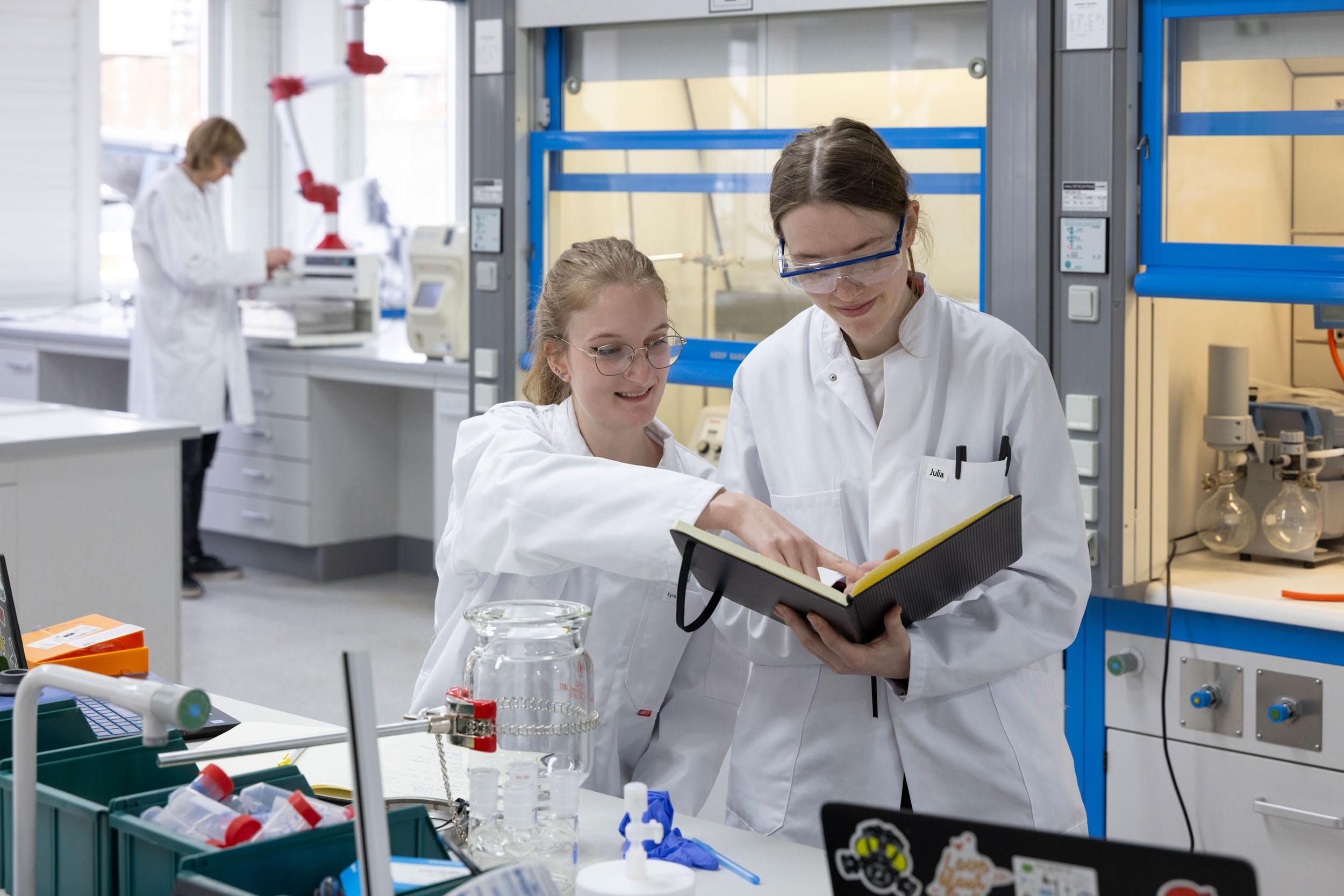
At the JRCB, vocational, applied university and university students work together on projects focused on biobased technology, with fermentation as a common thread. “One student works hands-on, another focuses on analysis and reporting, and yet another dives into theory. By bringing them together, they learn not only from the content but also from each other,” Nicolle says. Supervisors give students plenty of room. “We coach more than we direct. That can take some getting used to, but you can see how students grow in this environment.”
FermiChem also brings education to life outside the lab. With “FermiChem on Tour,” students and lecturers explore the region, visiting companies and organisations where biobased applications can be seen in action. “Many students choose the Medical Laboratory Research programme because they are interested in medical themes, while there are also many opportunities in the biobased sector here in the region. FermiChem on Tour allows them to get acquainted with those possibilities in an accessible way,” Nicolle explains.
Collaboration as the foundation of green chemistry
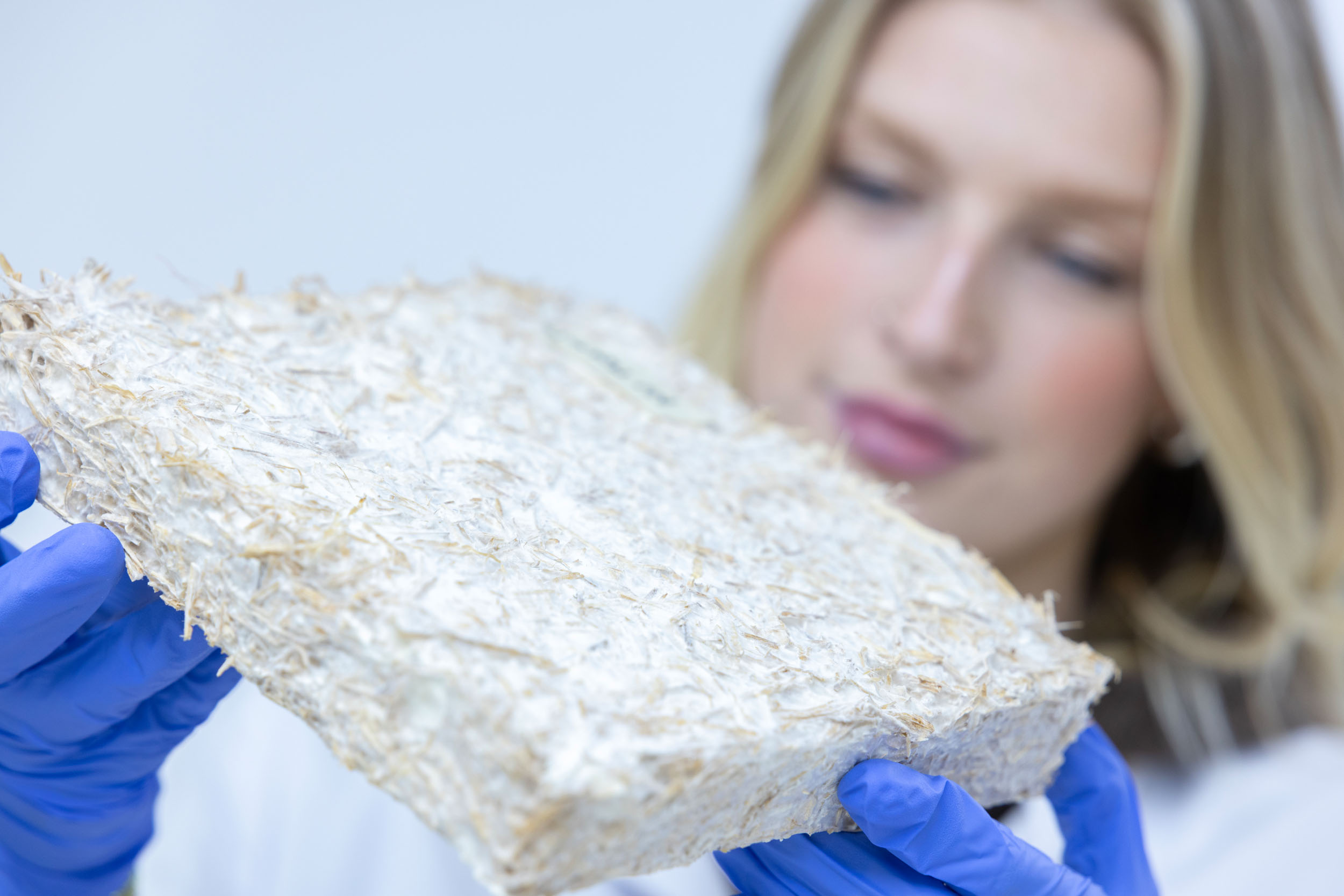
For researchers, the JRCB is the place to conduct innovative research, Jasper says. “We work on biobased chemicals here, for example from residual streams or fungi. Fermentation plays a central role in this. It is a smart and sustainable way to produce valuable building blocks that we normally extract from fossil sources. That is interesting from a content perspective, but just as important is the context in which it happens: together with students, lecturers and companies.”
This collaboration produces tangible results: from new fermentation processes and scalable applications to educational modules that merge theory and practice. “You walk from the lab to the theory room and back. Students work on real research questions. That dynamic is incredibly valuable.”
He also highlights the importance of the international students in the lab: “We’ve had people from Spain, Italy, Vietnam, Syria and Brazil. That makes the environment even richer. Everyone brings their own background, and you can see that reflected in the way they collaborate.”
Blueprint for the future
Both Nicolle and Jasper hope that FermiChem’s impact will not end when the project does. “We are building something that adds lasting value to education and research,” Nicolle says. “Not a pilot, but a blueprint for long-term collaboration between education and practice.”
Jasper agrees: “I hope the lab will become a natural place for education, research and collaboration. That you think: hey, I want to develop a module on fermentation? Then we’ll do it at the JRCB.”
FermiChem shows what is possible when education, research and practice truly come together. Students learn in a realistic environment, researchers work on societal challenges, and companies gain new insights. In this way, the project prepares a new generation of professionals for a circular economy in which fermentation and biobased chemistry play a key role.