


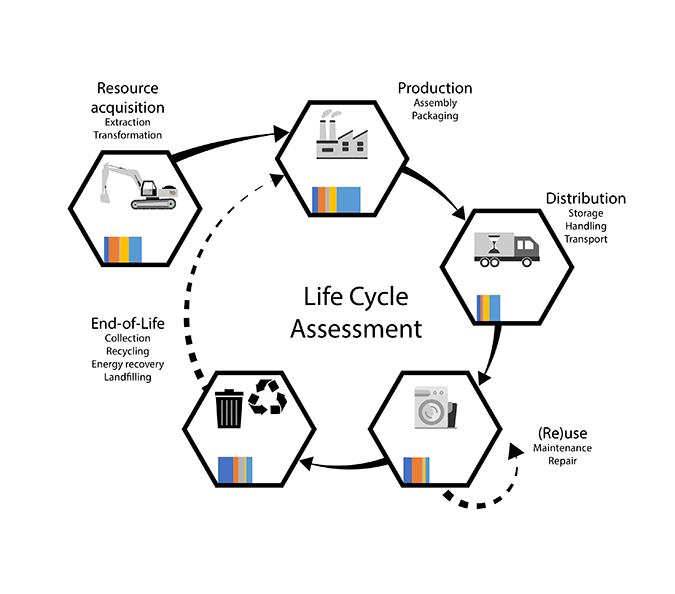
In MNEXT, we apply LCA within our innovative research projects. Many times, we apply as we call it a hotspot analysis. It is a simplified version of LCA, based on the same principles. However, due to the technology readiness level of our research, it makes more sense to do such a hotspot analysis rather than a full LCA.
Hotspot analysis is a less time-consuming method and can help answer multiple questions. This indicative assessment can give insight into the environmental performance of a certain product or process. It can help to determine the most impactful phase, the most impactful process step or the most affected environmental impact category within the analyzed system. It is also possible to target just a part of a full life cycle. These insights can, specifically during this phase of research, help to further optimize innovative concepts to reduce environmental impact and improve sustainability.