

MNEXT > Vacatures > DeCoTex: DeColorisation of Textile with Supercritical CO2 for Recycling
Stage

DeCoTex: DeColorisation of Textile with Supercritical CO2 for Recycling

Are you interested in textile recycling, polymer characterisation and supercritical CO₂ technology? In this internship, you will work on evaluating and improving the decolorisation of PET textiles using supercritical CO₂, in collaboration with Ft Innovations and Saxion University of Applied Sciences. The project is part of MNEXT’s mission to support companies in reducing textile waste and moving towards true textile-to-textile recycling.
Startdatum 02 February 2026
Solliciteren voor 30 January 2026
Ervaring Internship or graduation internship
Locatie Breda
Solliciteren

Background Information

The Biobased Building Blocks & Products (BBBP) research group at MNEXT focuses on developing sustainable materials, including innovations for reducing waste in the textile and fashion industry.

In this project, MNEXT collaborates with Ft Innovations and Saxion to investigate whether PET textile materials can be effectively decolorised using supercritical CO₂. This technology has the potential to remove dyes without degrading the polymer, making textile fibres suitable for high-quality recycling.

The goal of the project is twofold:

  • Achieving effective decolorisation, and

  • Ensuring that PET retains its mechanical and thermal properties, allowing it to be reused in high-value textile applications.

Assignment Description

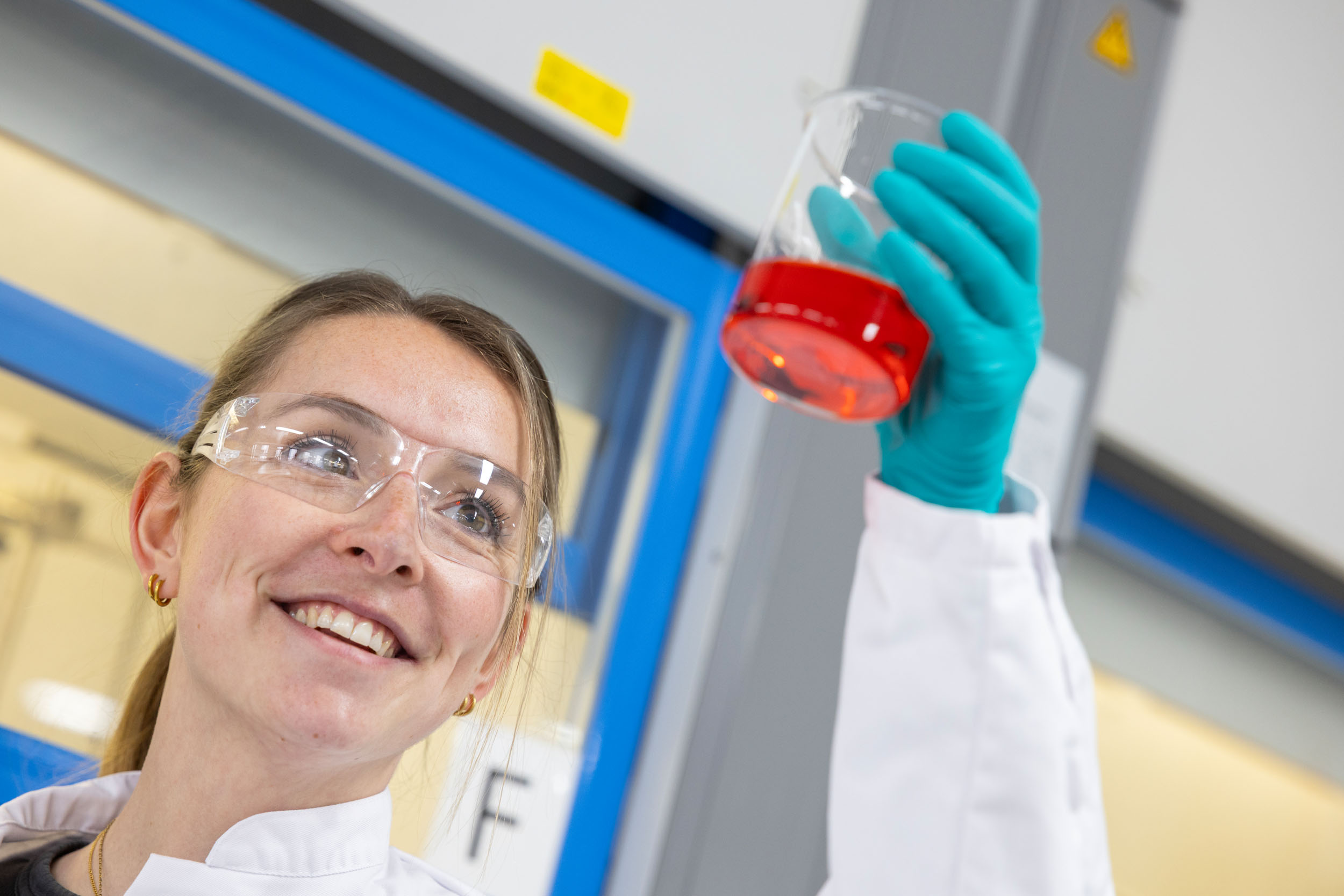
In this internship, you will work with supercritical CO₂ equipment and develop methods to characterise the polymer before and after decolorisation.

Your tasks may include:

  • Performing experimental work with supercritical CO₂ extraction equipment

  • Developing and applying characterisation methods for PET

  • Comparing polymer properties before and after treatment

  • Working with analytical techniques such as:

    • Tensile testing

    • GPC

    • DSC

    • TGA

  • Conducting literature research on PET recycling, dye removal and supercritical CO₂ processes

  • Documenting results and writing a clear research report

Research questions

  • How effectively can PET textiles be decolorised using supercritical CO₂?

  • How can the polymer’s mechanical and thermal properties be preserved during the process?

Desired Skills

We are looking for a student with:

  • Background in chemical engineering (preferred) or chemistry

  • Experience or interest in experimental lab work

  • Ability to work with analytical techniques and characterisation methods

  • Motivation to work on sustainable textile recycling pathways

  • Good reporting and documentation skills

Supervision

The internship will be supervised by Wim Gaakeer, with regular meetings to review progress, results and next steps.

Practical Details

  • Compensation: €350 per month

  • Working language: English

Meer informatie? Neem contact op met:

Wim Gaakeer

Mail wa.gaakeer@avans.nl Telefoon 31885258417 Solliciteer direct

Meer vacatures

DeDye – Redye: Decolorization and Recoloring of Polyester fabrics for a Closed Circular Chain
Breda
Stage
CASCO – performance of bio-based insulation; theory vs. practise
Breda
Stage
CASCO: Sustainability Calculation Tools
Breda
Stage
Sustainable Conversion of Waste CO₂ to Methanol – A Process Simulation Approach
Breda
Stage
Experimental Validation of High-Temperature Co-Electrolysis of CO₂ and Steam to Syngas Using Solid Oxide Electrolysis Cells (SOEC)
Breda
Stage
Fabrication of Functionalized Biochar Electrodes with Metallic Co-Catalyst for the Hydrogen Evolution Reaction (HER)
Breda
Stage
Process Simulation of Hydrogen-Based DRI Steelmaking Combined with High-Temperature Electrolysis
Breda
Stage
MycEoLA: Prototyping End-of-Life Possibilities for Mycelium Bio-Composites
Breda
Stage
Improving Biodegradability of Coatings Through Pretreatment
Breda
Stage
Environmental impact: Chemical vs mechanical recycling
Breda
Stage
ABEL: Mapping and valorisation of low-grade biomass for a biobased circular economy
Breda
Stage
Biobased Adhesive Development
Breda
Stage
Development of biobased polymer additives using lignin
Breda
Stage
BioColEol: Development and testing of masterbatches with sustainable curcumin-derived colorants
Breda
Stage
BioColEol: Improving stability and application potential of natural colorants through chemical modification
Breda
Stage
MycoClay: Mechanical investigation of mycelium-clay components for the built environment
Breda
Stage
MycoClay: Feasibility investigation of mycelium-clay components for the built environment
Breda
Stage
Accelerating Training Processes and Improving Network Technology Knowledge for Specialized Electrical Installations within Energy Hubs
Breda
Stage
Upgrading underutilized plant-based sources into valuable food ingredients and products
Middelburg
Stage
Protein Digestibility of Fermented Seaweed and Foods
Middelburg
Stage
LApure – Process development for lactic acid recovery
Breda
Stage
(Afstudeer-)stage in Brazilië via Living Lab Biobased Brazil
Stage