



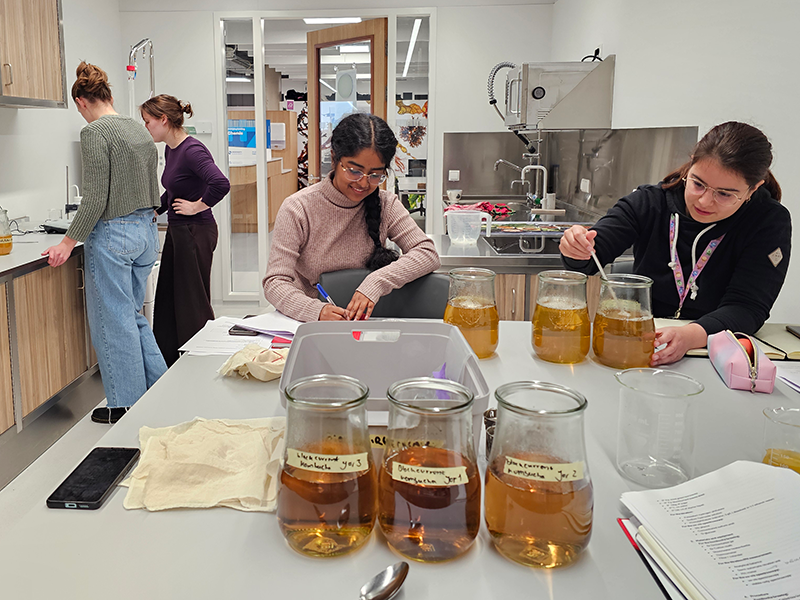
The Marine Biobased Chemistry research group works on a wide range of applied research projects within food science, life sciences, and analytical chemistry. Our projects are carried out in close collaboration with companies and other partners from the food processing industry.
Research themes range from sustainable food innovation and marine food applications to the development and optimization of analytical methods and innovative processing techniques. Depending on the project, you may work on process development, laboratory analyses, product quality, or method validation, for example.
Some projects focus, for instance, on the valorization of marine and agricultural biomass, such as seaweed, saline crops, and food waste streams. These materials contain valuable components such as proteins, fibers, minerals, natural colorants, and flavor components that can be applied in innovative food products.
Together with industrial partners, we investigate how processing techniques such as extraction, fermentation, and preservation can be used to develop sustainable and high-quality food ingredients and products. Additionally, projects may focus on the development of analytical methods for assessing raw materials, food quality, and functional properties. Other examples of research topics include:
• Extraction and characterization of valuable components
• Development and optimization of analytical methods
• Research into food quality, shelf life, and preservation
• Nutritional, chemical, and functional food analyses
• Method development using techniques such as HPLC, GC-MS, UV-VIS, and microbiological analyses
• Fermentation and processing of seaweed and saline crops
• Development of innovative food processing techniques
We offer various internship projects with varying levels of complexity, depending on your background, interests, and educational requirements.
What will you be doing?
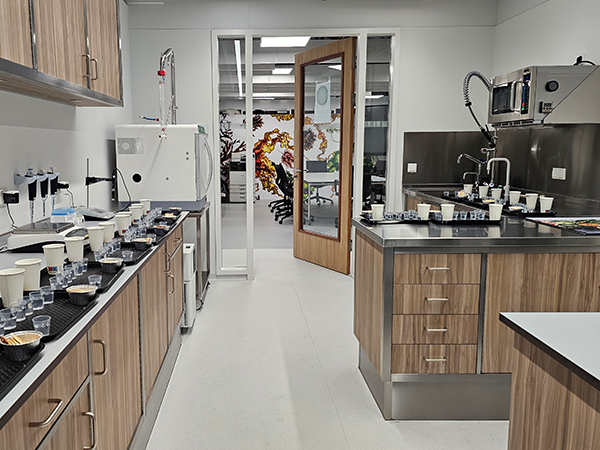
Depending on your background and interests, your activities may consist of:
• Conducting literature research
• Designing and conducting experiments in collaboration with the project team
• Optimizing food processing techniques, such as fermentation, extraction, and preservation methods
• Working with analytical techniques such as GC-MS, HPLC, UV-VIS, microbiological analyses, and in vitro digestion analyses
• Developing or applying analytical methods
• Working with both simple and complex food matrices
• Analyzing and interpreting research data
• Presenting results within the project team and to industrial partners
You will work on real research questions within a multidisciplinary environment.
What will you learn?
During your internship, you will gain experience with:
• Applied food and laboratory research
• Experimental design and data analysis
• Chemical, physical, and microbiological analyses
• Working with complex food and biological samples
• Collaborating with researchers and companies
• Independent laboratory work and project-based research
Who are we looking for?
You are:
• A university or Master’s student in chemistry, life sciences, food technology, nutrition, or a similar field of study
• Interested in laboratory work, analytical chemistry, food innovation, or applied research
• Curious, proactive, and motivated to learn
• Able to work both independently and as part of a team