


A supplychain approach with a practical focus
The strength of BioADD 2.0 lay in its broad chain approach. The project brought together expertise regarding the production and grinding of biochar, the production of masterbatches, compounding, polymer processing, and material testing. It was precisely this combination that made it possible not only to assess the potential of biochar application in biopolymers and composites, but also to test its processability and performance in end products.
An important part of the project was the production of biochar-containing masterbatches. A masterbatch is a concentrated mix of biochar and polymer in the form of pellets. These pellets are easier to transport, dose, and mix than loose powder. Additionally, they ensure a more uniform distribution of biochar in the end product, which benefits product quality and mechanical properties. This is relevant for further industrial development.
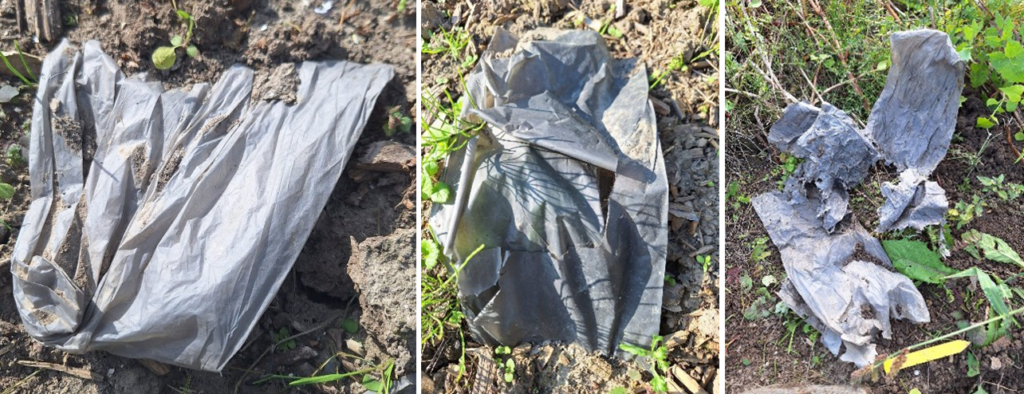
Preliminary field observations help the project gain insight into the behavior of the foil under various soil and weather conditions.
Applications in fertilizer pellets, agricultural film, plant pots, and clips
BioADD 2.0 examined applications in fertilizer pellets, agricultural films, plant pots, and horticultural clips, among others. In these products, the need for sustainability and functional performance come together. For growers and manufacturers, it is not sufficient for a material to be bio-based or biodegradable; it must also function well in practice.
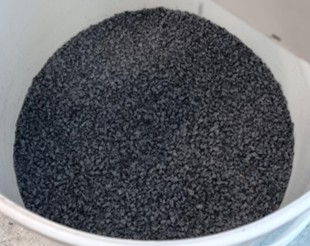
An important application was a fertilizer pellet based on biodegradable polymer, biochar, and urea that releases nutrients slowly. The polymer forms the biodegradable matrix, urea supplies nitrogen to the plant, and biochar acts as a carbon-rich component in the pellet. The results of laboratory trials showed that the developed fertilizer pellets release nutrients gradually and can therefore ensure more efficient nutrient use. The polymer was biodegradable. This can contribute to reducing microplastics in the soil.
Photo below: Biodegradable polymer/biochar/urea granules, developed for slow nutrient release.
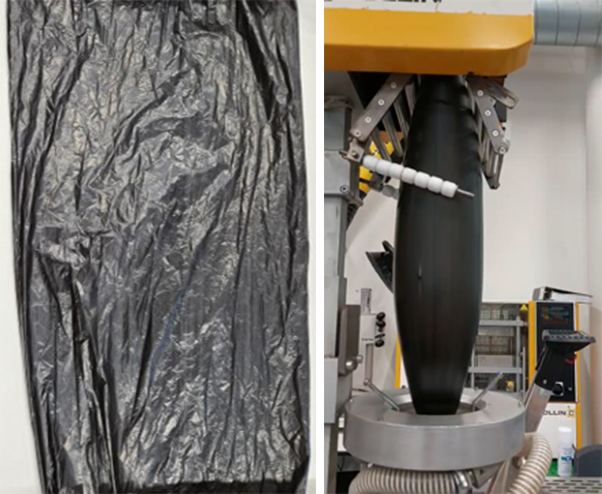
In agricultural film, processing plays an important role alongside material selection. The films must be homogeneous, thin enough for practical use, and sufficiently dark to limit light transmission. In the project, biodegradable films containing biochar were produced via blown film extrusion. Smaller biochar particles contribute to darker and more homogeneous films, leading to better light blocking and film quality. The first field experiments provided insight into the behavior of the developed films under varying soil and weather conditions.
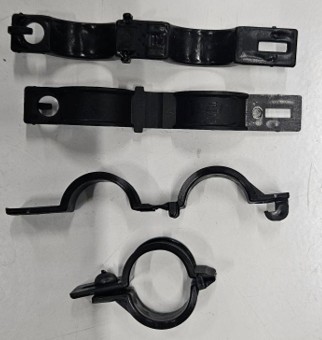
Plant pots and horticultural clips also presented a logical application. These products are widely used in greenhouses and nurseries and are often removed and discarded after use. This makes them relevant for biodegradable and bio-based material solutions.
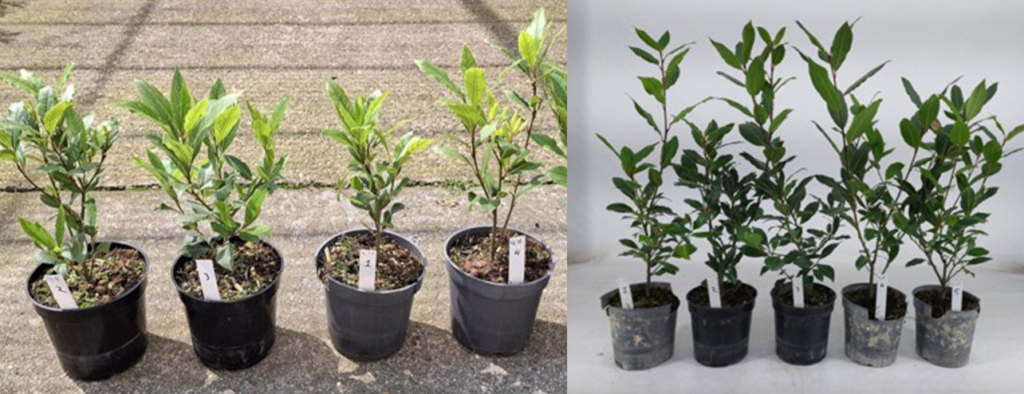
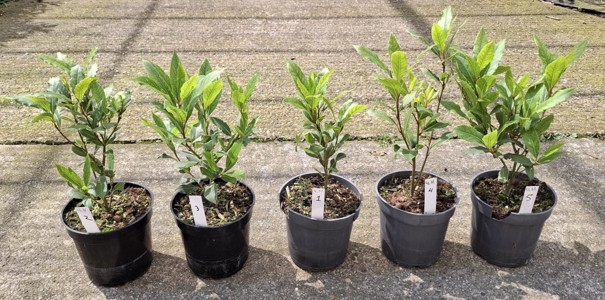
Trials with plant pots provided insight into their use under horticultural conditions.
Image left: May 2024. Image right: November 2024
Mechanical properties as a boundary condition
For all the applications mentioned, mechanical properties are decisive. Plant pots and clamps must be sufficiently rigid and strong without becoming too brittle. Agricultural films, on the other hand, must remain thin and homogeneous. A significant part of the BioADD 2.0 research therefore focused on the question of how particle size, dispersion, and composition of biochar influence properties such as stiffness, strength, and toughness.
This makes the project’s output relevant to business partners as well. BioADD 2.0 has shown that the development of biobased materials only truly gains value when raw material, processing, and application are viewed in conjunction. It is precisely in this connection between material innovation and practical application that the significance of this project for the sector lies.
Photo left: Horticultural clips with biochar, produced as a prototype.
Photos right: Blown film process for biodegradable films with biochar.
Partners throughout the value chain
BioADD 2.0 brought partners together across the entire value chain, from biochar production and particle size reduction to polymer processing, product development, agricultural trials, and distribution. Many thanks to Eindhoven University, Aeres UAS, Nettenergy, CharcoTec, Betanet, Bato Plastics, NPSP, BB Plants, Varta, Oerlemans Plastics, SIGN, and CompositesNL for the great collaboration!
BioADD 2.0 is made possible by SIA, within the framework of the RAAK-mkb program.
Het laatste nieuws
25-09-2026