


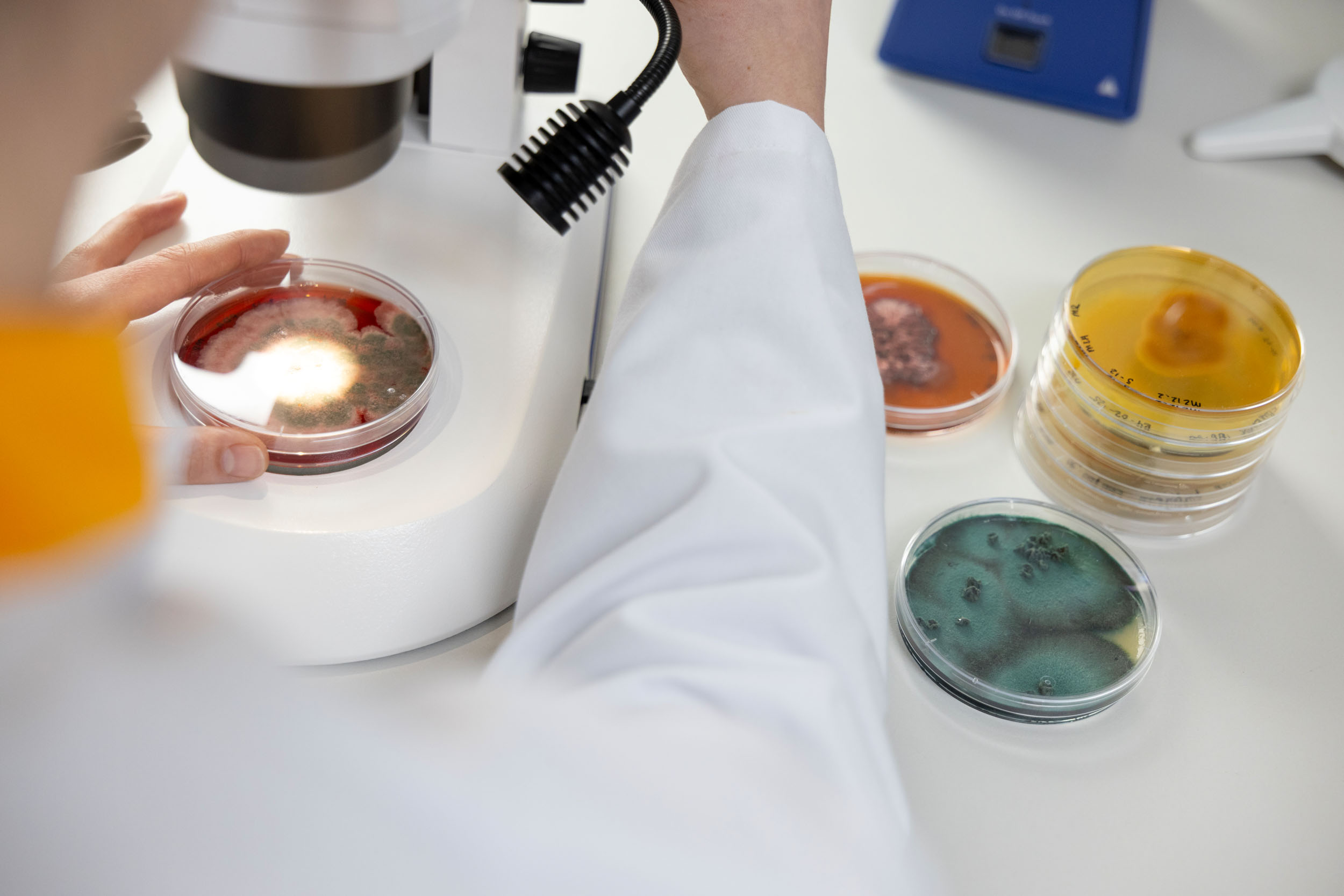
Pigments play an important role in a wide range of products, but they are still often made from fossil-based raw materials or produced through processes that require large amounts of energy, water and chemicals. Fungi offer an interesting alternative: through smart fermentation, they can produce pigments from biobased feedstocks. The challenge is to produce and purify these pigments reliably and efficiently, and make them suitable for different applications. ColorFun therefore focuses on the entire development chain, from production and extraction to pigment properties and applications.
From the lab to larger volumes
A larger-scale fermentation run for the blue pigment is planned for the coming period. Preparations are also underway to further develop the production of orange pigments. Scaling up will not only provide more material for further research and application testing, but also show how the production process performs at larger volumes.
Extraction, purification and formulation are also being further optimised. This will help determine how the pigments can be produced and processed efficiently and consistently.
Jasper Meijer, senior researcher and ColorFun project leader at MNEXT, explains: “By moving from the lab to a larger scale, we can bring fungal fermentation closer to production and enable our partners to test the pigments more extensively.”
Testing in practice
A pigment is only truly promising if it can also be used in a product. That is why the pigments are being tested in a range of applications. The tests look not only at colour, but also at properties such as colour intensity, stability, processability and how well the pigment adheres to or mixes with a material.
Project partner NPSP develops environmentally friendly composite materials and products for applications including construction and public spaces, using biobased and circular raw materials wherever possible. Within ColorFun, NPSP is investigating the potential of fungal pigments for use in biobased composite materials. The initial application tests are providing valuable insights into pigment performance and the properties that still need further development. Colour intensity and purification are among the key areas requiring attention.
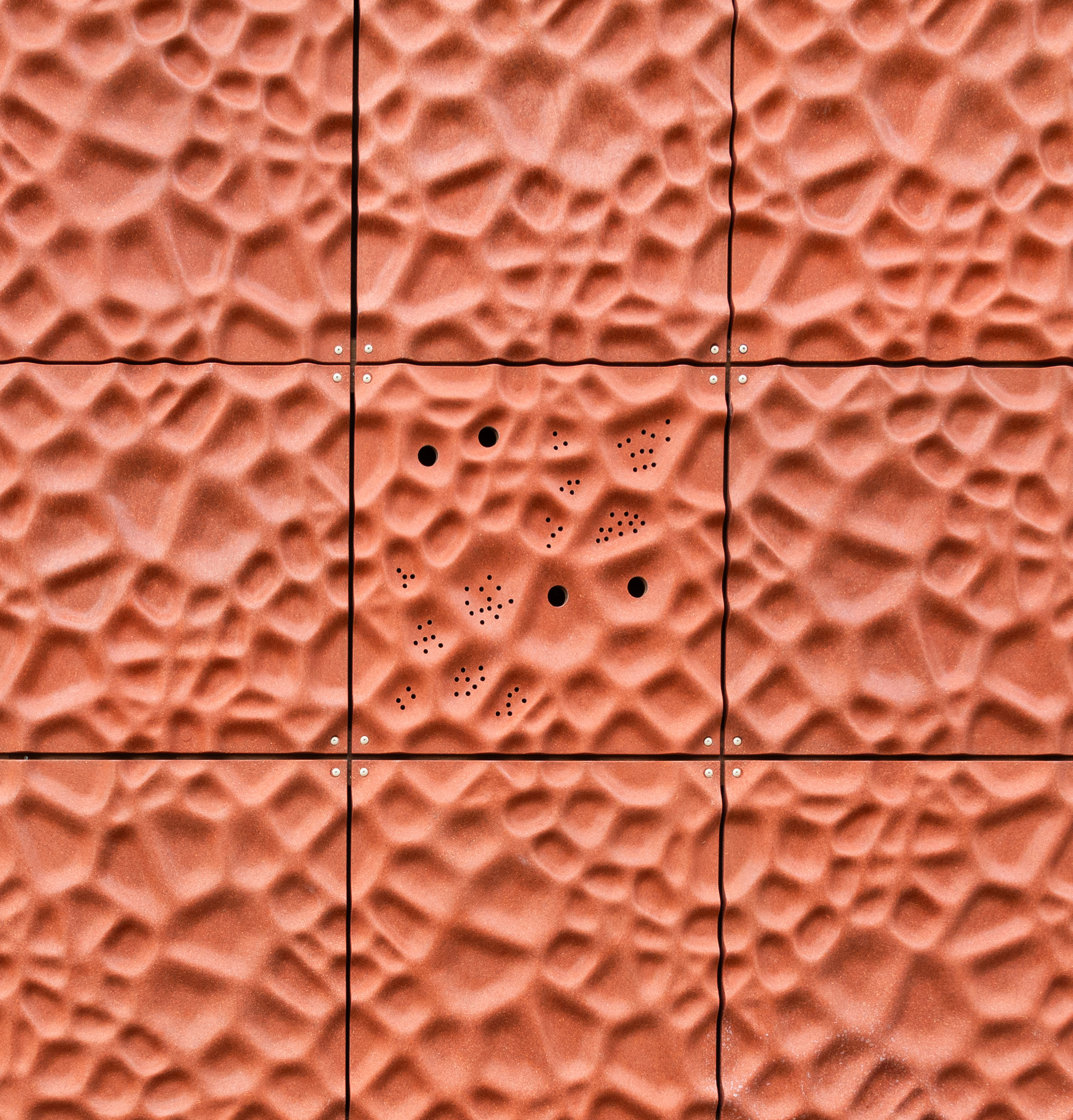
Nina Rodenburg, Product Designer at NPSP, says: “Fungal pigments could allow us to add natural colour to our 100% biobased façade panels. An important requirement is that the colour remains resistant to weathering over time.”
(See the image on the right for the 100% biobased façade panel, currently coloured with conventional pigments.)
The practical test results will help determine the next steps in development. A pigment must not only be technically feasible to produce, but also meet the requirements of the material and its intended application.
Towards practical applications for fungal pigments
In the coming period, research findings and practical experience will be brought together. The safety and composition of the pigments will also be investigated further. This will provide a better understanding of what is needed to make fungal pigments reliable, scalable and suitable for practical applications.
This involves more than determining whether a pigment works technically. The availability of raw materials, production efficiency, colour reproducibility and compatibility with existing processing methods are also important. By taking these aspects into account from the outset, the pigments can be better prepared for use beyond the laboratory.
With planned scale-up activities and new application tests, ColorFun is entering its next phase: moving from smart fermentation towards sustainable pigments for real-world applications.
Interested in biobased pigments?
Companies interested in testing the blue or orange pigments, or exploring potential applications, are welcome to contact the project leader: Jasper Meijer